
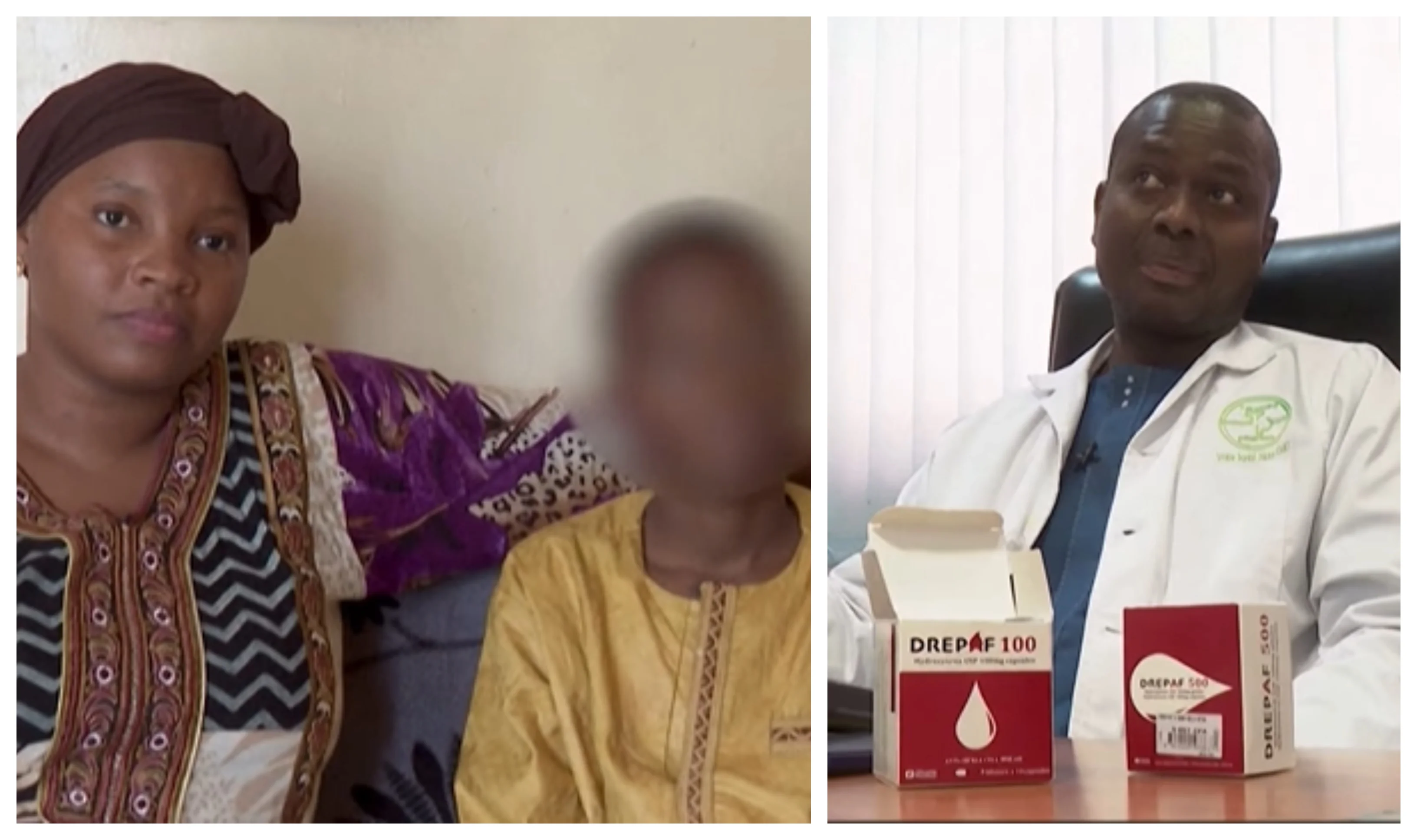
- Teranga Pharma in Dakar developed DREPAF, the first sickle cell medication manufactured on African soil, targeting a disease that affects 80% of the world's 8 million cases
- An 18-year-old Senegalese patient named Mamadou Tahirou has struggled with sickle cell disease since age 15, unable to walk due to pain and barely able to afford care
- The over one-billion-dollar pharmaceutical project has already drawn interest from six African nations seeking access to the locally produced drug
A Senegalese pharmaceutical company has developed what is being described as the first sickle cell drug produced entirely on African soil, offering a potential lifeline to millions of patients across the continent who currently cannot afford imported treatments.
Teranga Pharma, based in Dakar, unveiled DREPAF in a development that could reshape how one of Africa's most widespread hereditary conditions is managed. The drug targets sickle cell disease, a blood disorder in which abnormally shaped red blood cells restrict oxygen flow throughout the body, causing debilitating pain and life-threatening complications.
A Teenager's Painful Reality
The cost and scarcity of treatment are devastatingly familiar to 18-year-old Mamadou Tahirou, who was diagnosed with sickle cell disease at the age of 15. Three years on, he is unable to walk due to pain in his feet and remains hospitalised, while his family struggles under the financial weight of ongoing medical bills.
"It's been three years since I was told I had sickle cell disease and I know it's really bad. It hurts a lot and you suffer so much. And when you don't have enough resources to protect yourself from the illness, you suffer even more. My parents are exhausted. I know that," Mamadou said.
His mother described the toll on their household. "My son is very tired and he is still in hospital. He has pain in his feet and at the moment he cannot walk. It is very difficult. The medication and hospital costs are very expensive," she said.
Mamadou's situation is far from unusual. Africa accounts for roughly 80% of the world's 8 million sickle cell cases, yet affordable, accessible treatment has remained largely out of reach for most patients.
A Local Solution to a Continental Crisis
Teranga Pharma's chief executive said the company's founding vision goes beyond commercial interest. "We have set the mission of taking charge and shaping the pharmaceutical future of Senegal and sub-Saharan African countries. So this policy will continue. Our approach is based not only on financial considerations, but also on public health. Because today, if Africa is to develop, if Africa is to enjoy good health, the medicines that Africans take must be produced in Africa," he said.
The project, valued at over one billion dollars, has attracted attention from several African governments, including those of Burkina Faso, Guinea, Côte d'Ivoire, the Democratic Republic of Congo, Gabon and Cameroon, all of which are reportedly exploring access to the medication.